Projects > Programming > Shapeshifter

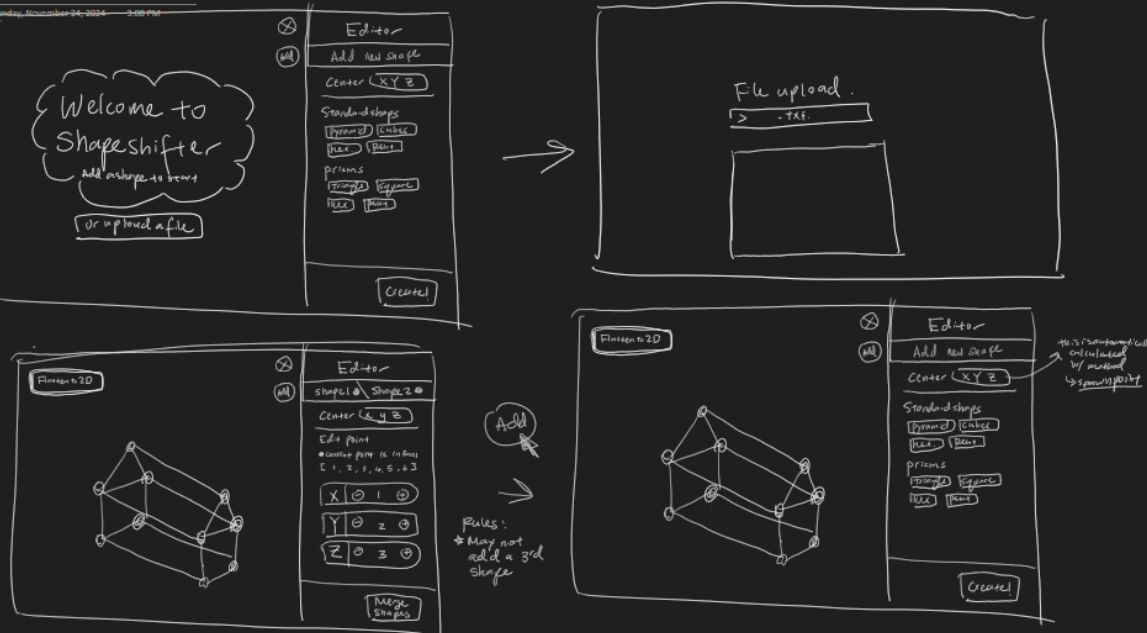
I created an interactive 3D editor that allows users to design and manipulate one or two 3D shapes. This was inspired by my experiences using TinkerCad and Blender.
 Project Repository
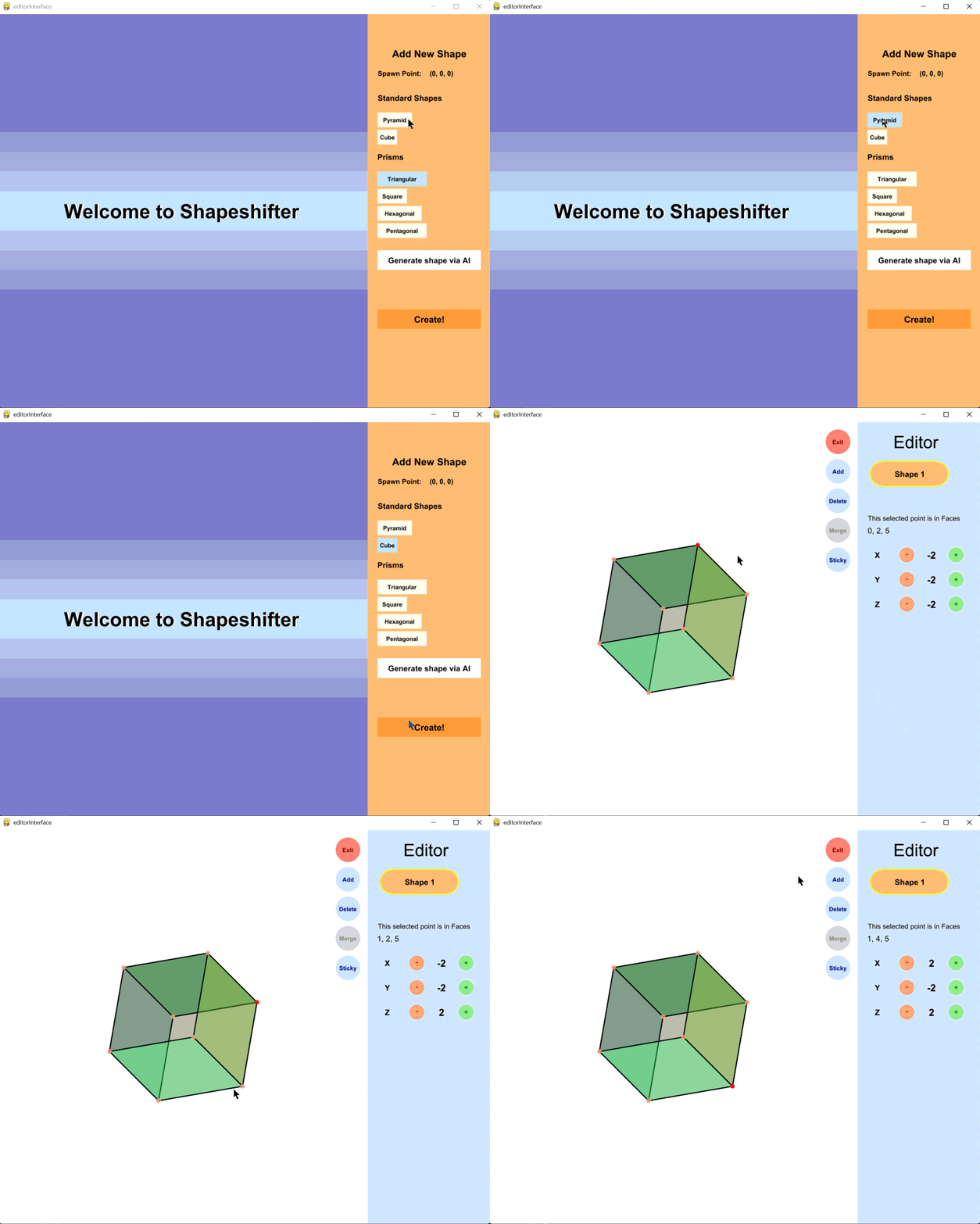
Feature Demo #1
Editing Vertex Endpoints
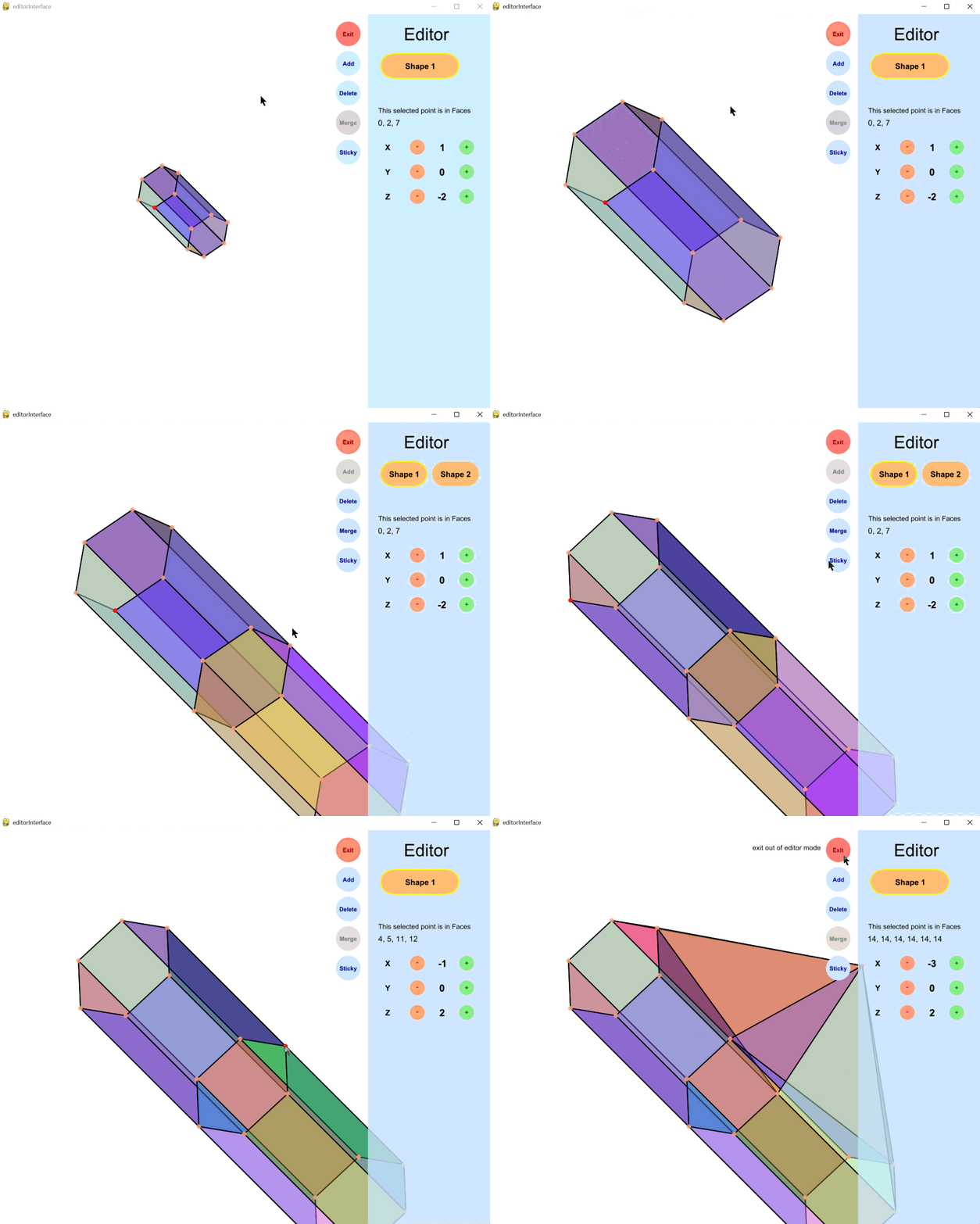
You can edit 3D positioning of any of the points by selecting the vertex and then adding or subtracting from the original value.
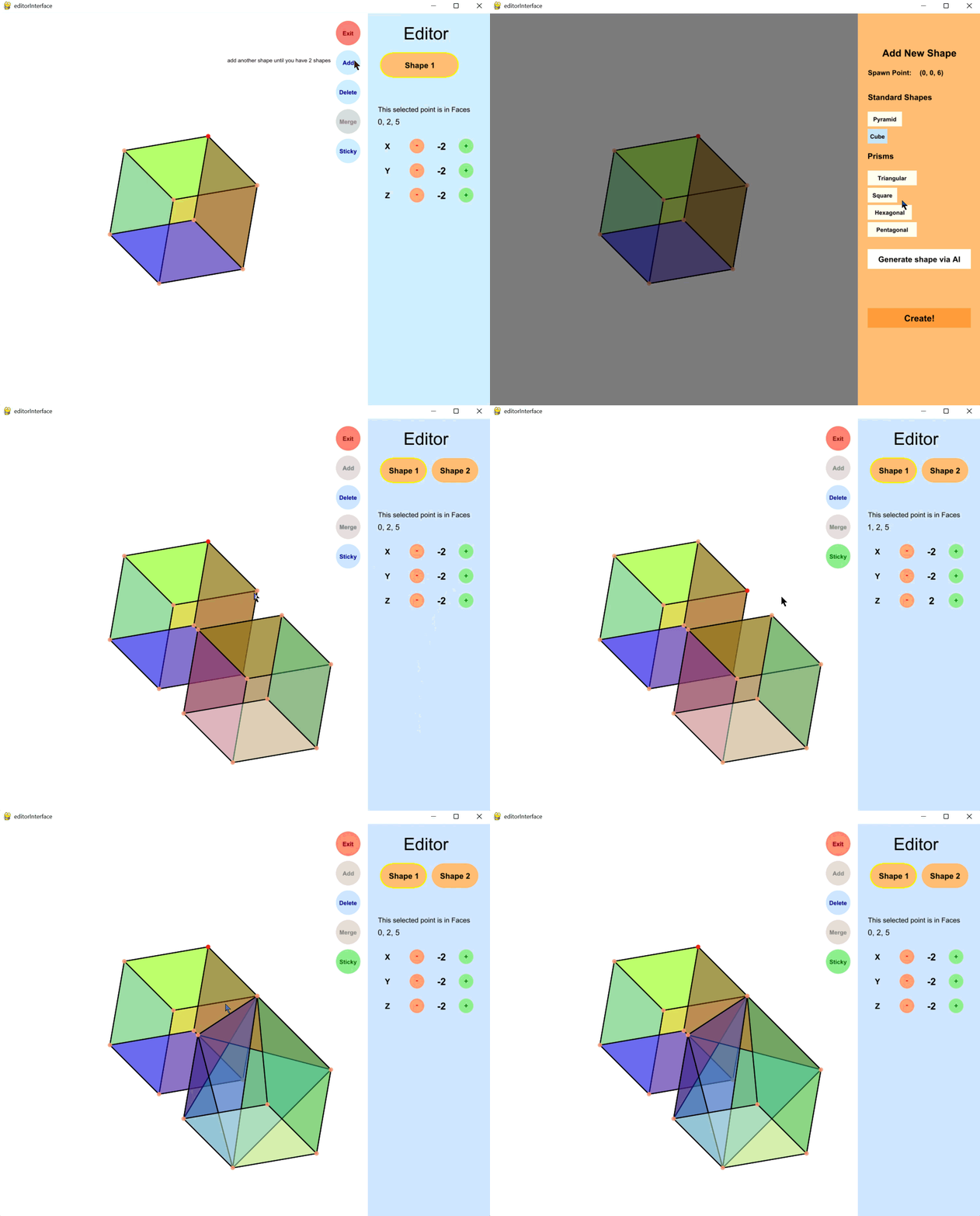
Feature Demo #2
Adding Shapes and Sticky Edges
You can add up to 2 shapes at a time, after the limit is reached, the add button is disabled. Additionally, you can activate the sticky feature to apply the position of one endpoint to another — which helps create shared faces for the next step.
Feature Demo #3
Merging Faces
When the two shapes share any of their faces, the merge feature is activated. If the two shapes are merged, they behave as a single shape (with the intermediate face removed). And as a result, you can add more shapes with the add button! Additional features showcased here are: zoom in ('+') and rotation ('w' and 's' for rotation along z-axis)
Why this project?
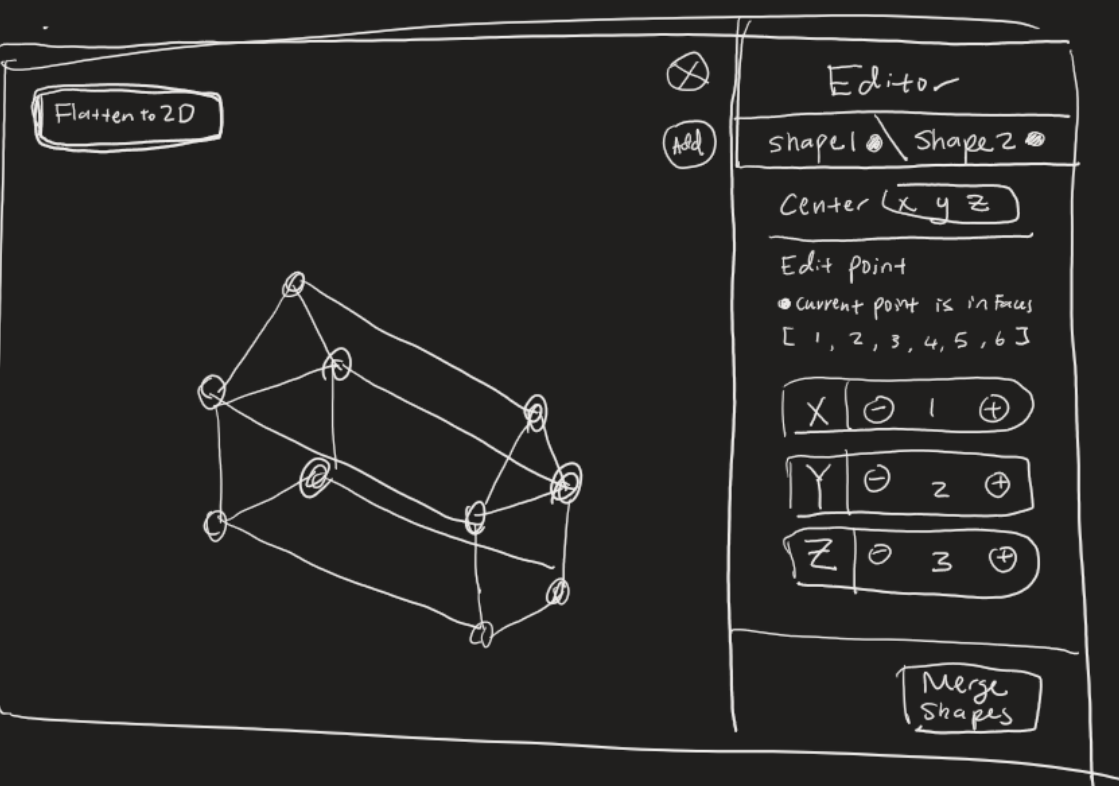
I've always been intrigued by the idea of displaying 3D objects on a 2D interface — how are we supposed to store and show 3D objects when all we are given is a flat medium, such as a computer screen? When prompted to create a unique term project for my class, I took the opportunity to explore these ideas.
Things I’m Proud of
- Shapeshifter was selected as one of five projects to be demoed at the 15-112 Term Project Showcase, out of more than 500 submissions.
- I chose to design my own object classes for geometric primitives, which gave me control over how shapes behaved and transformed.
- Working on Shapeshifter allowed me to turn abstract mathematical ideas into intuitive, interactive visuals, which was a particularly satisfying process for me as a visual thinker.